If you’re reading this while pretending to be active on Slack, I see you. If you’re sitting in a coffee shop in BGC, staring at a spreadsheet and wondering if life is just a series of Zoom calls until you die, this is for you.
Forget the curated sunsets of El Nido. Forget the drone shots of Coron, that view’s hard to come by if you’re not flying like that machine. We’re going south. Way south. To a place where the Wi-Fi signal goes to die and the “Art of the Tambay” is the only metric of success.
Welcome to Onuk Island, Balabac. It’s messy, it’s far, and it’s the most honest place you’ll ever visit.
Where is Onuk Island Located? (And why that matters)
Let’s get the logistics out of the way. Where is Onuk Island located? It sits in the municipality of Balabac, at the jagged southern tip of Palawan. If you look at a map, it’s closer to Malaysia than it is to Manila.
That distance isn’t just a number; it’s a filter.
Most people won’t make it here. The “Insta-famous” crowd usually gives up when they realize there are no infinity pools or boutique hotels. Reaching Onuk is a commitment to the journey itself. It involves a 6-hour van ride that will test the limits of your lower back, followed by a boat ride that depends entirely on whether the Sulu Sea is having a good day or a mid-life crisis.
But that’s the beauty of it. The effort required to get here ensures that once you arrive, you aren’t surrounded by tourists; you’re surrounded by travelers.
How to Actually Get to the Middle of Nowhere: Why We Trust Kamp Malaya
This is not a paid feature, we just really loved our Kamp Malaya experience
I’ve been to the edge of the map twice now, and both times, I let Balabac Island Tours-Kamp Malaya handle the logistics. In a place where the ocean is the boss and the ports are confusing, you don’t want to be the one “figuring it out.” You want to be the one yielding to the experience.
Booking directly with them is the only way to go. They don’t just give you a boat; they give you a home base on Sicsican Island.
The Specs: 4 Days & 3 Nights (The All-In Reset)
Rate: Php 13,799 / Head (Joiner Rate)
This isn’t a luxury line item. It’s an all-in package that covers the essentials so you can actually forget your phone exists:
- The Transit: Round-trip van transfers from Puerto Princesa to Buliluyan Port (the correct port) and the boat transfers between islands.
- The Fuel: Full board meals (Breakfast, Lunch, Dinner). No menus, no decisions—just fresh food.
- The Entry: All entrance fees and the coveted Onuk Island day tour are included.
- The Sleep: Camping tents with complete beddings at their basecamp on Sicsican Island.
Pro-Tips from Someone Who’s Been There Twice
- The Buffer Rule: Take a flight to Puerto Princesa a day before your tour starts. Book your exit flight for the day after your tour ends. The Sulu Sea doesn’t care about your airline’s schedule.
- The Onuk Upgrade: If you want to wake up in the middle of that mint-green water, you can stay overnight on Onuk Island for an additional fee. It’s a literal dream.
- Food Prep: If you have allergies (shrimp, crabs, pork), tell them early. They cook what’s fresh, so give them a heads-up.
- The Essentials: Bring a light towel, reef-safe sunblock, and Cash. There are no ATMs on the islands, and you can’t pay for extra halo-halo with a QR code.
The Fine Print (Because Reality Matters): A Php 1,000 deposit secures your slot. It’s non-refundable if you cancel, but if the Coast Guard calls off the trip due to weather, they’ll refund the services not rendered or help you reschedule. Once the boat leaves the port, you’re committed to the plot.
The “No Drones, No Good Cams” Reality
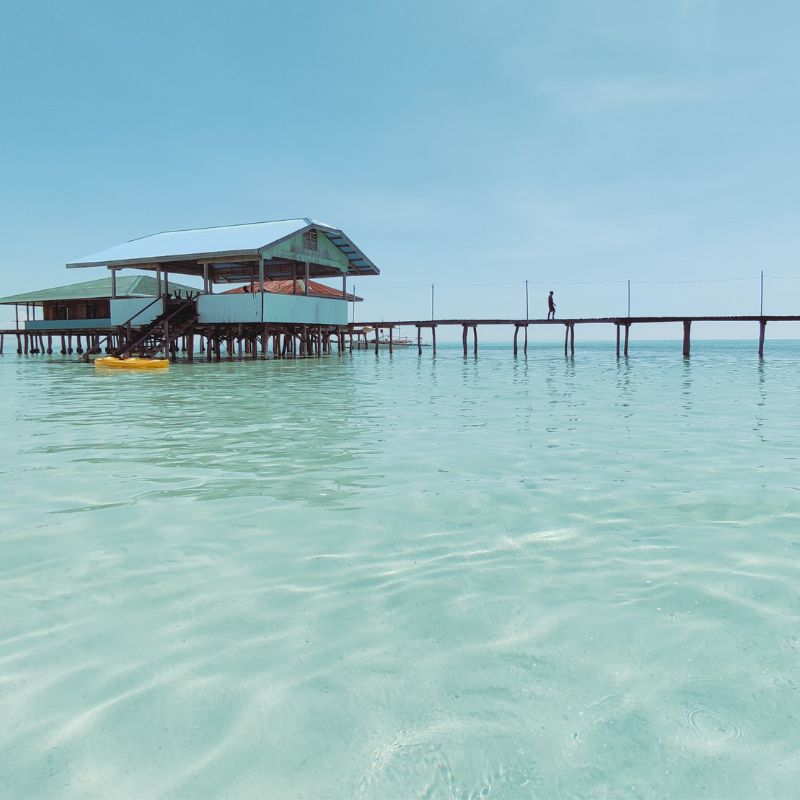
At YOLO Travel Philippines, we have a thing: No need for drones, or the best cams. Why? Because when you see Onok island photos online, they look like they’ve been hit with every filter in the book. You assume it’s fake. Then you get there with your beat-up smartphone or just your own two eyes, and you realize the water actually is that ridiculous shade of mint-green.
You don’t need a 4k drone to capture the fact that the ocean here looks like it’s been lit from underneath. You just need to be present. Onuk doesn’t perform for your followers. It just exists.
What Onuk Island is Actually Known For
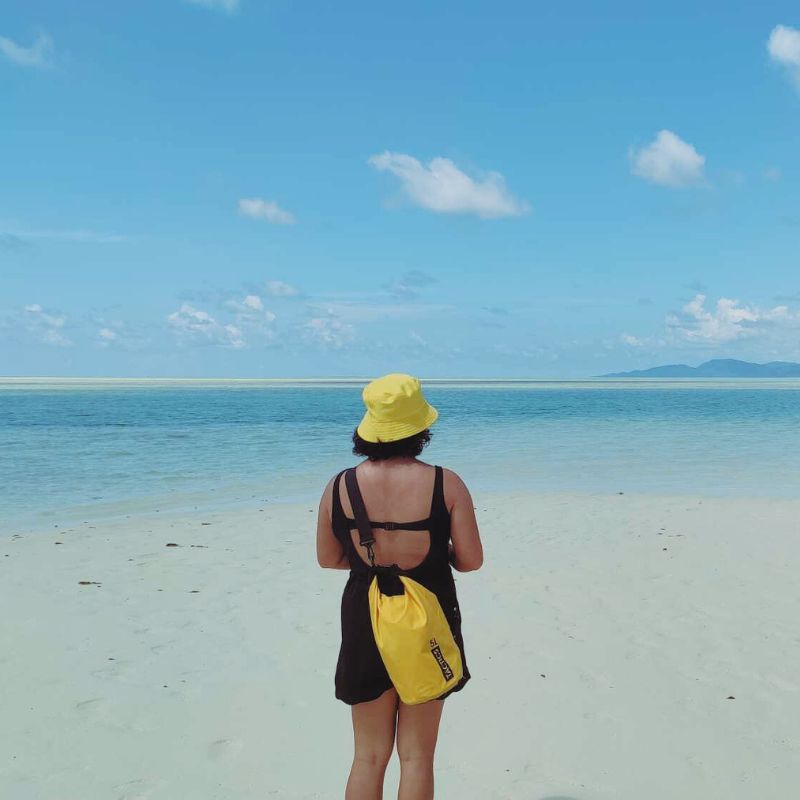
- The Infinite Flats: At high tide, you’re standing in a basin of luminous cyan. At low tide, the island sheds its skin. Massive sandbars emerge—broad, firm stretches of white that make you feel like you’re walking on the edge of the world.
- Unstaged Marine Life: The turtles here don’t care about your GoPro. They surface for air, look at you with total indifference, and head back down. You might see a small reef shark or a ray gliding like a shadow across the sand. No one is baiting them. It’s just their home.
- The Silence: No “beach club” beats. No jet skis. Just the sound of the wind and the water breaking against the reef. For a burned-out digital worker, this silence is loud. It’s the sound of your brain finally resetting.
It would be pricey but keep in mind that this isn’t a “luxury tour.” It’s an invitation to a simpler, saltier version of life.
The Onuk Island Tour Package: What You’re Actually Buying
Don’t go looking for this on a fancy booking site. You won’t find it. To get here, you’ll usually book an Onuk island tour package through local operators based in Balabac town.
The Real-Deal Specs:
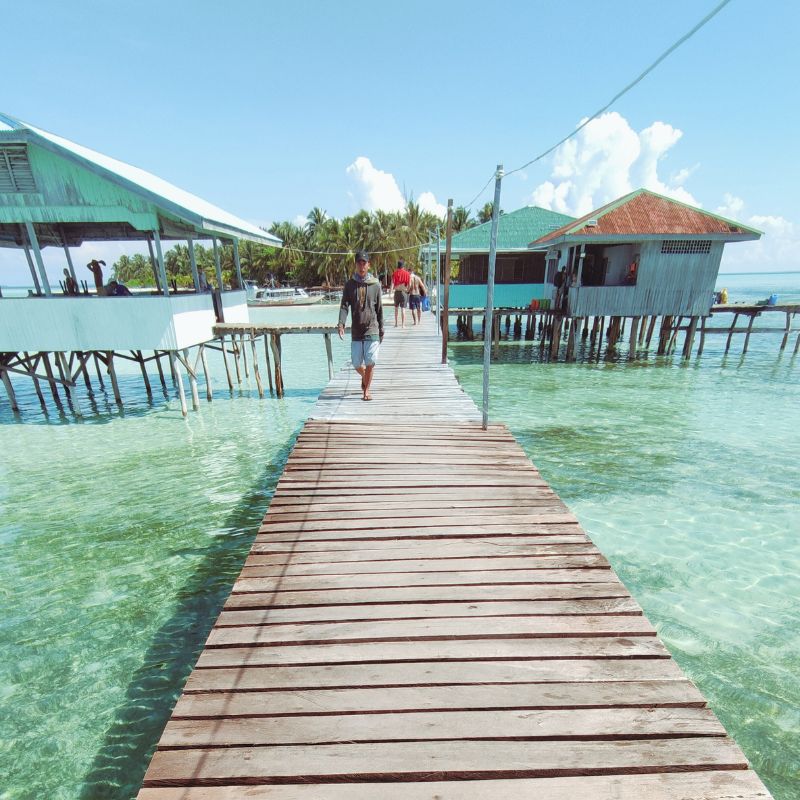
- Accommodation: Think open-air stilt houses or tents. You get a mattress and a mosquito net. That’s it.
- Electricity: A generator might run for a few hours at night. Use it to charge your phone—not so you can scroll, but so you have a flashlight when you need to find the bathroom at 2 AM.
- Food: Whatever was fresh at the market or caught that morning. Fish, rice, maybe some seaweed (lato) that tastes like the ocean. It’s real food for real hunger.
- The Bathroom: It’s a bucket-and-dipper (tabo) situation. If you can’t handle that, Balabac isn’t for you—and that’s okay. But there’s something strangely grounding about manual labor just to flush a toilet.
The Art of the Tambay: Slow Travel for the Soul
The “Slow-Living” seeker knows that the best part of travel isn’t the “doing,” it’s the “being.”
On Onuk, you don’t have a checklist. You have the tides. When the tide is low, you walk. You watch the tiny crabs. You notice how the sky reflects in ankle-deep water. When the tide is high, you float.
For the Lost & Found Adventurer
Things will go wrong. Your boat might be delayed by two hours because the captain had to wait for a specific delivery. It might rain. You might get a “Balabac Kiss” (a sandfly bite).
The old you would have sent a frustrated email. The “Onuk” you just laughs and buys another 20-peso halo-halo from a local vendor. You start to realize that the mishaps are where the stories are. The delays are just extra time to talk to the backpacker next to you about their life in a hostel in Vietnam or their job as a VA in Davao.
The “Buffer” Rule: Why You Need 6 Days for a 4-Day Trip
If you try to “optimize” this trip by flying into Puerto Princesa and expecting to be on a boat three hours later, the universe will laugh at you. In the south, speed is a myth.
To actually own your life offline, you have to respect the logistics of the edge. Here is the reality of the timeline:
- The Day Zero Arrival: You need to be in Puerto Princesa (PPS) the day before your tour starts. The van to Buliluyan Port leaves at 2:30 AM. Unless you plan on teleporting from the airport to the van, get a hotel in the city, eat a real meal, and sleep for four hours. You’ll need it.
- The Day 1–4 Journey: This is the heart of the reset. This is when you’re with Kamp Malaya, navigating the tides.
- The Day 5 Safety Net: Do not, under any circumstances, book your flight out of PPS for the same afternoon you return from the islands (Day 4). Between the boat ride back to the mainland and the 6-hour van crawl back to the city, you won’t reach PPS until 3:00 PM or later—assuming there are no flat tires or sea swells.
- The Verdict: Allot at least 5-6 days total. Arrive Day 0, Tour Days 1–4, Fly home Day 5 (or later).
Giving yourself an optional extra day in PPS isn’t “wasted time.” It’s a transition period. It’s the “decompression chamber” before you have to look at a laptop again.
Why Digital Nomads Need This (And Why They’ll Hate It Initially)
If your identity is tied to your “responsiveness” on Slack, Onuk is going to hurt.
For the first four hours, you’ll feel an itch in your pocket. You’ll check for signal. You’ll find nothing. You’ll feel a weird sense of panic. What if someone needs me? Then, the sun starts to set. The sky turns a bruised purple and gold. The Milky Way starts to peek out because there’s zero light pollution. And you realize: the world didn’t stop because you went offline.
You aren’t producing “deliverables” here. You’re producing clarity. You’re remembering that you are a human being, not a resource.
First-Timer Realities: The Raw Version
- Sun Protection: There is no shade on a sandbar. If you don’t wear a rash guard, the sun will eat you alive.
- Cash: Bring it. Lots of it. There are no ATMs in the middle of the West Philippine Sea.
- Connectivity: Forget it. Consider it a feature, not a bug.
- Flexibility: The ocean is the boss here. If the Coast Guard says don’t sail, you don’t sail. Yield often, laugh often.
Is Onuk Island Worth It?
If you need a 5-star resort to feel like you’ve traveled, stay in Manila.
But if you want to stand on a sandbar so far from civilization that the stars look like they’re touching the water… if you want to eat with your hands and sleep to the sound of waves hitting the stilts under your bed… if you want to remember who you are when you aren’t “logged in”…
Then yes. Onuk Island is worth every bumpy van ride. You’ll leave with salt in your hair and sand in your bag, but you’ll also leave with a quietness in your chest that you haven’t felt in years.