
Category: Balabac

  • Balabac, Palawan: The Kind of Beautiful That Makes You Question Reality

    Balabac, Palawan: The Kind of Beautiful That Makes You Question Reality

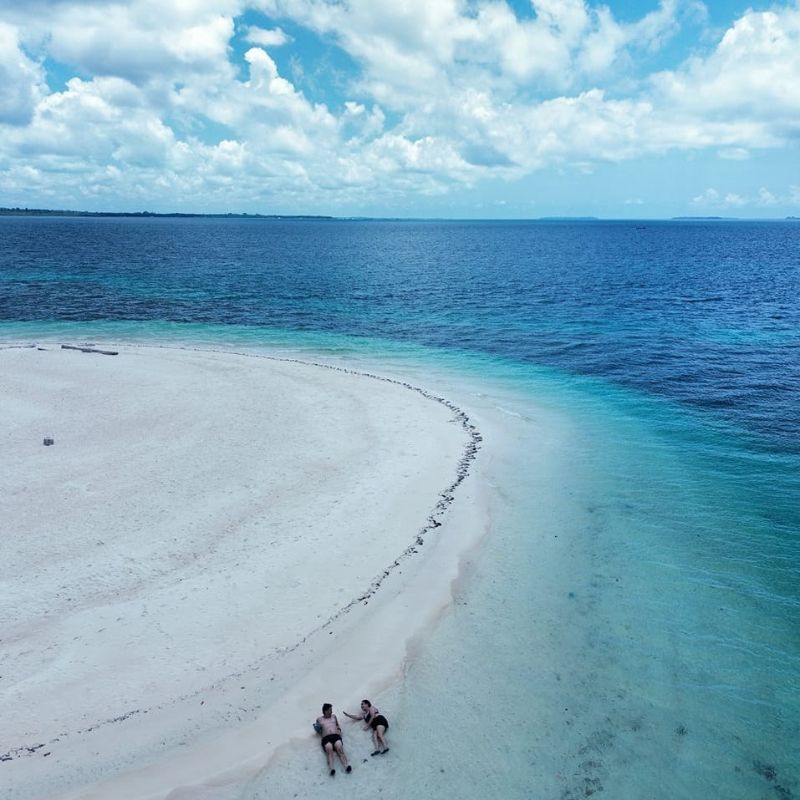
    I’ve been to a lot of beaches in the Philippines. I say that without drama. I’ve seen the usual turquoise, the usual white sand, the usual “this looks like a postcard.”

    But Balabac?

    Balabac doesn’t look like a postcard.
    It looks like someone edited the saturation too high — except it’s real.

    The first time we stepped onto one of its islands, the entire boat just went quiet. Even the foreigners in our group — the ones who had been island-hopping across Southeast Asia for months — just stared.

    It’s that kind of place.

    If you’re craving something that feels untouched, slow, and almost surreal… Balabac in southern Palawan is still one of the last places in the Philippines that delivers that feeling without filters.

    And yes — we’ve done it twice.

    Both times, we booked with Balabac Island Tours – Kamp Malaya (not to be confused with other operators with “Malaya” in their name). And both times, they handled everything from Puerto Princesa transfers to island permits without us needing to stress over logistics. This is not a paid feature we just really loved our experience!

    This guide walks you through what to expect — the islands, the experience, the costs, the camp life, and the honest parts people don’t always say out loud.

    Because Balabac isn’t cheap.
    It isn’t easy.
    But it is absolutely worth planning for.

    First, Let’s Talk Reality

    Balabac is located in the southernmost tip of Palawan — closer to Malaysia than to Manila. It’s remote. Getting there takes intention.

    You’ll need:

    • A flight to Puerto Princesa
    • A 5–6 hour land transfer to Buliluyan Port in Bataraza
    • A multi-day island-hopping tour (minimum 3D2N, but 4D3N is better)

    So no, this isn’t a spontaneous long weekend trip.

    It’s a commitment.

    But the moment your boat starts gliding across water that looks like liquid glass, you’ll understand why people come back.

    We did.

    The Islands We Visited (And Why Each One Feels Different)

    Balabac isn’t one single “main attraction.” It’s a constellation of islands — each with its own personality.

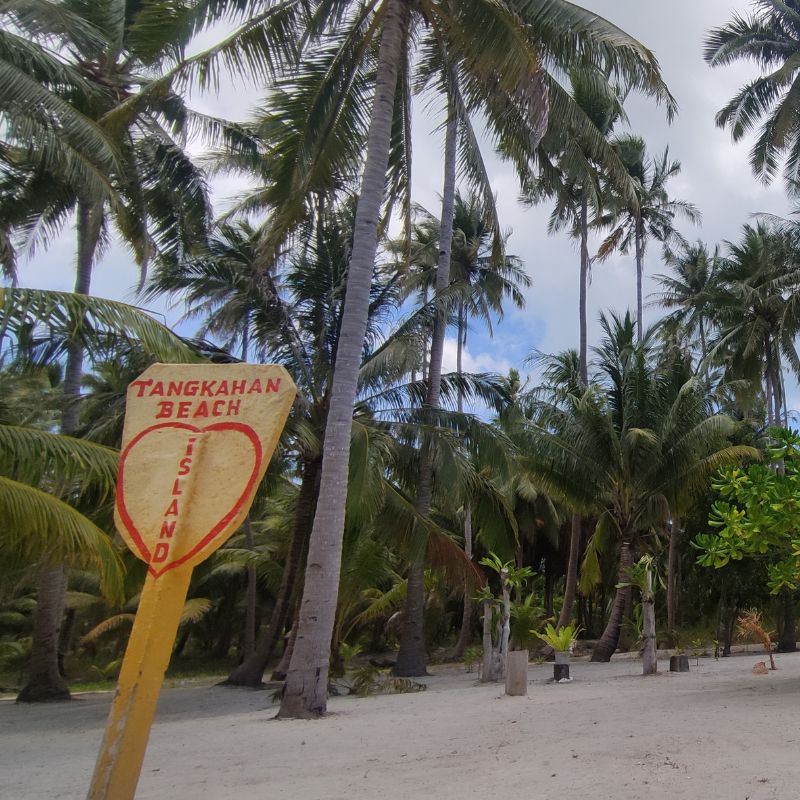
    Tangkahan Beach — The Soft Launch
    22

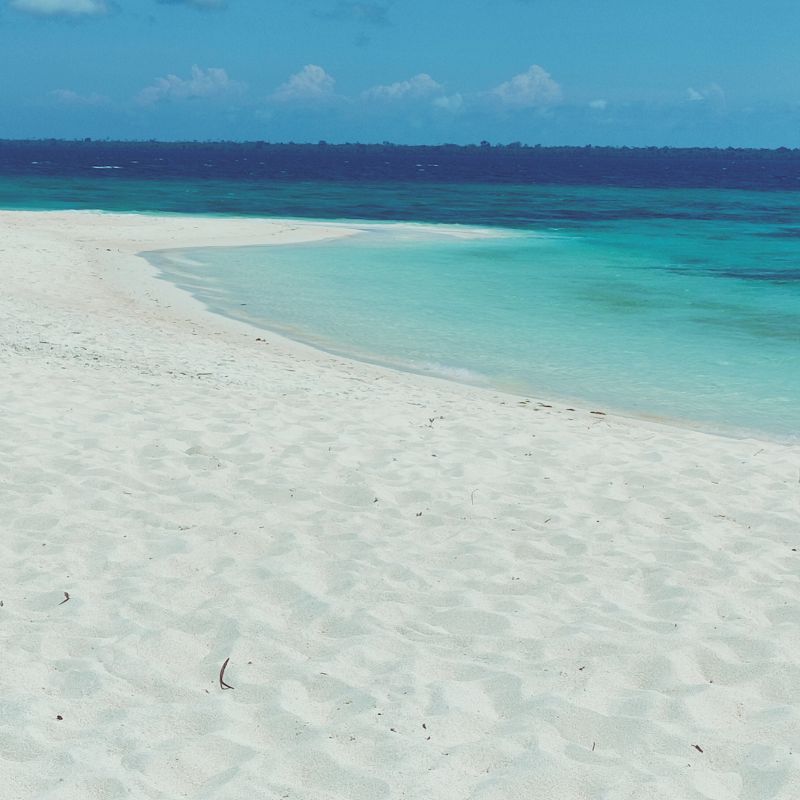
    This was our first stop after the long drive to Buliluyan. Clear skies. Bright noon sun. Sand so white it almost hurt the eyes.

    At first, I thought, “Okay, typical island hopping.” Then I stepped into the water.

    It wasn’t just blue. It was layered — pale aqua near shore, then deeper cobalt just meters away. And the sand? Powdery, clean, and wide open.

    It’s the kind of first stop that quietly sets the standard.

    Patawan Island — The Chill Intermission
    23

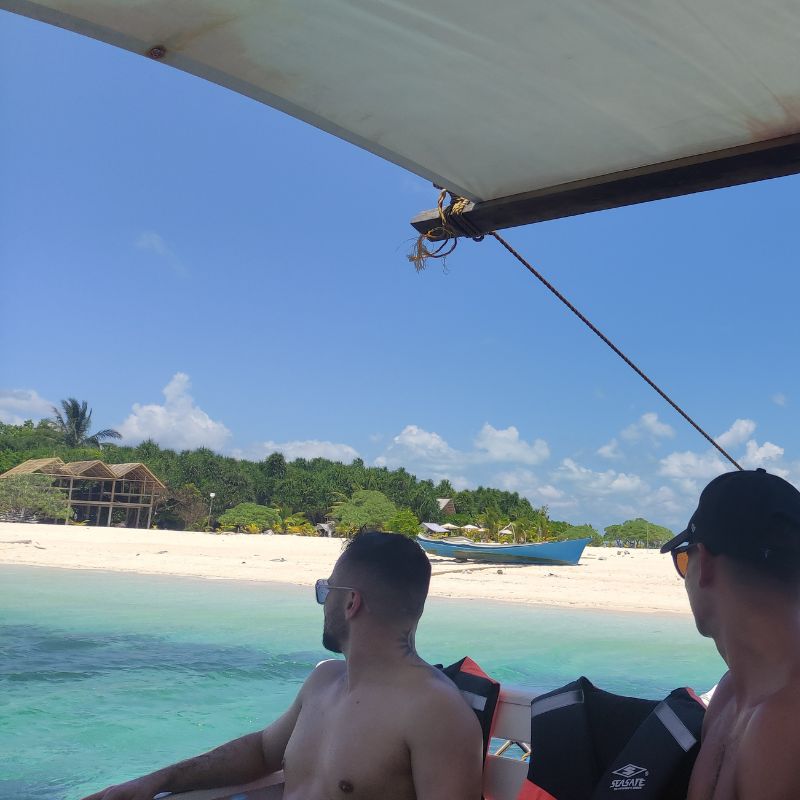
    If Tangkahan is dramatic, Patawan feels laid-back.

    There are simple huts for shade. A restroom (which matters more than people admit). And if you’re lucky, cold beer waiting in a cooler.

    We stayed here longer than expected — swimming, drying off, going back in again. The remoteness is what makes it beautiful. No jet skis. No loud speakers. Just wind and water.

    That’s when I realized this wasn’t going to be a “rush through ten islands for photos” kind of trip.

    Balabac moves slower.

    Sicsican Island — Camp Life Begins
    KAMP MALAYA REVIEW

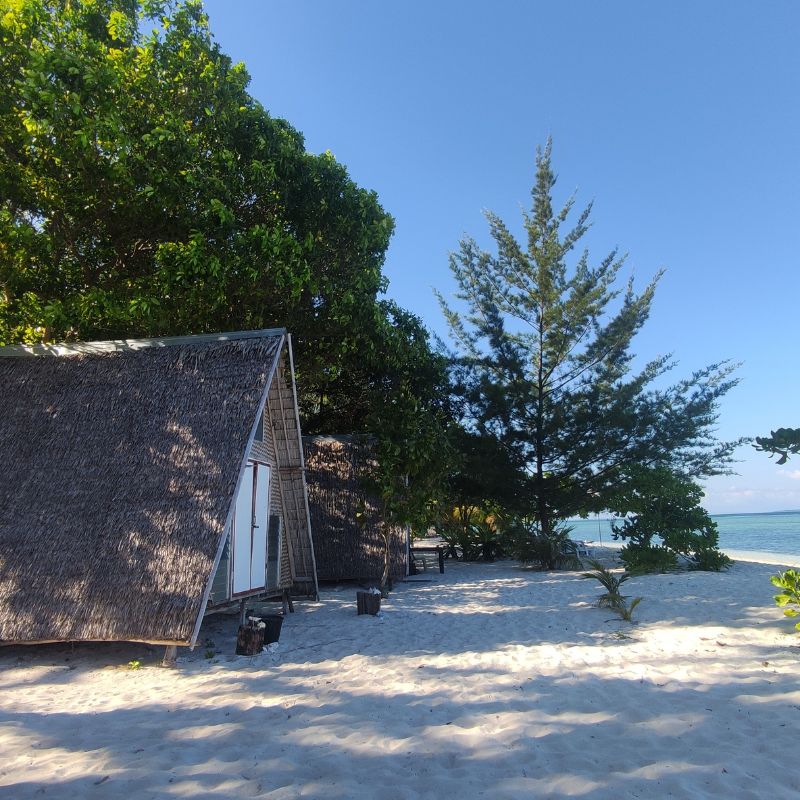
    Our group camped on Sicsican Island.

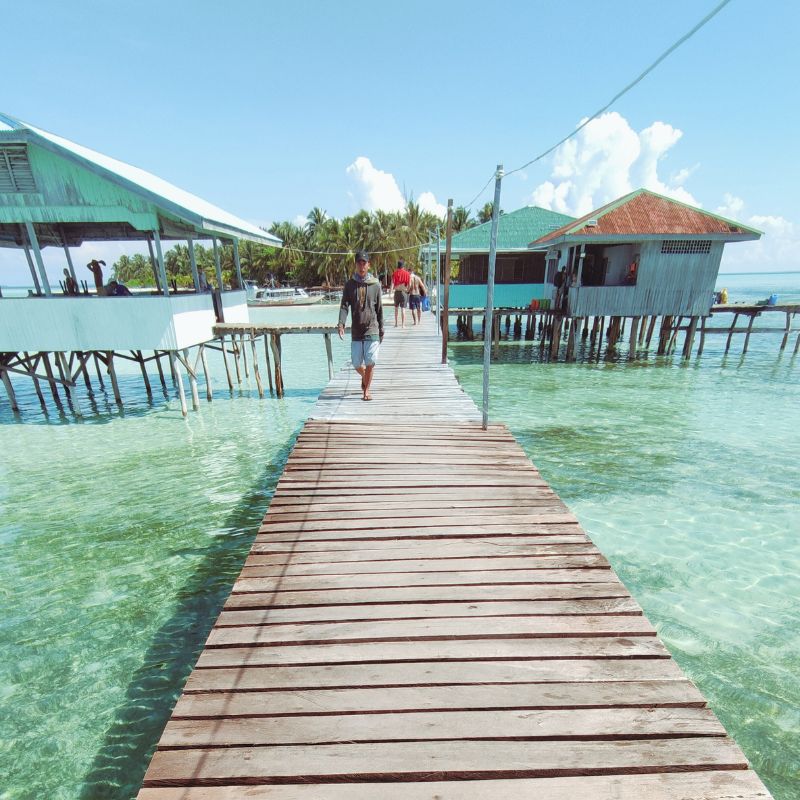
    The boat docks on one side, and you walk through a palm-lined path toward camp. It feels like entering a tiny hidden village.

    Most guests stayed in tents, but we booked early and secured a native-style hut — with a fan, outlet, mosquito net, and actual bed.

    If you’re going, book months ahead. Huts go fast.

    Electricity runs from 6PM to 6AM. Signal is weak (though they’ve recently added Starlink for limited access). And honestly? The lack of constant connection is part of the magic.

    You sleep earlier. You wake with the sun. You actually talk to people.

    Onuk Island — The Showstopper
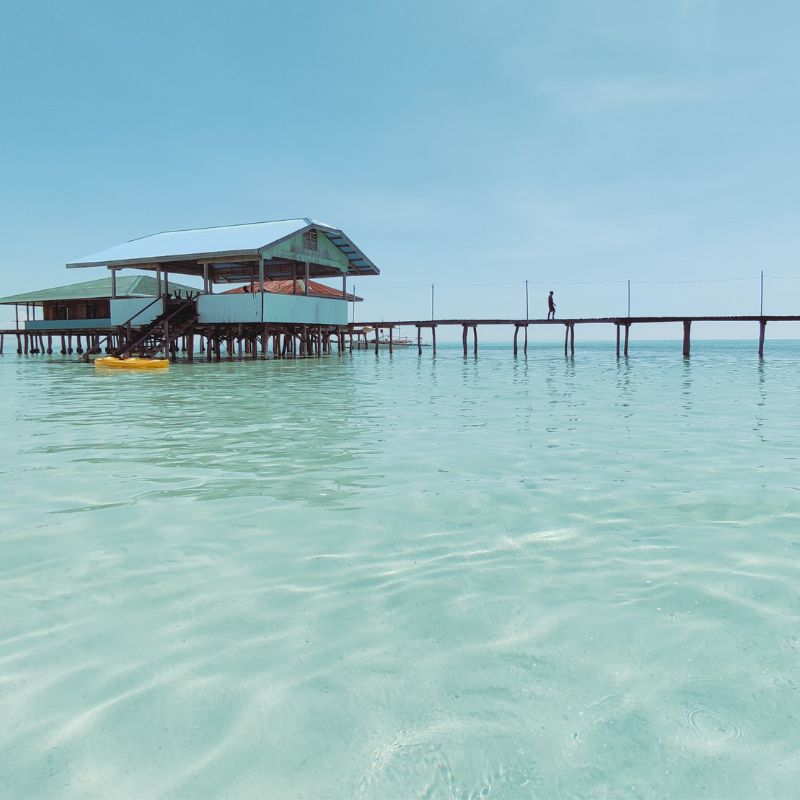
    onuk island balabac

    If Balabac had a crown jewel, it would be Onuk Island.

    We were greeted by giant sea turtles near shore. The sandbar stretches so far that even non-swimmers can comfortably wade waist-deep for what feels like forever.

    We stayed here for hours.

    Lunch was served under shade while the tide slowly shifted around us. Snorkeling here is unreal — even without diving deep, you’ll see coral gardens and fish darting in impossible colors.

    There’s an environmental entrance fee (around ₱1,500 per person at the time we visited), and honestly? It makes sense. Places like this survive because they’re protected.

    Photos don’t capture the stillness.

    Nasubata Reef — The Surprise
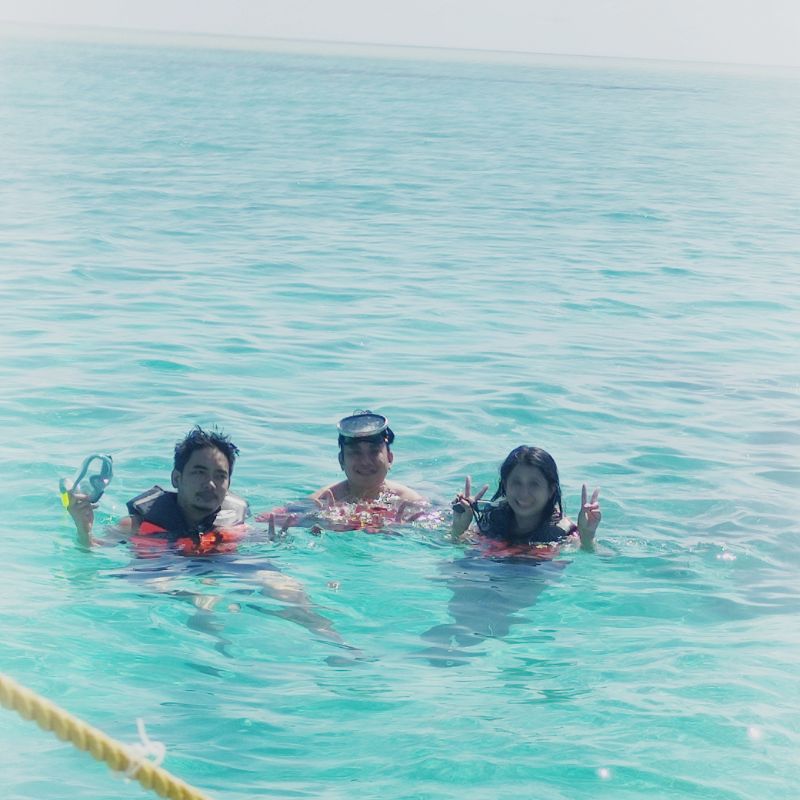
    16

    Our boat anchored in what looked like open sea.

    Then someone jumped in.

    Below? Coral structures and schools of fish suspended in perfectly clear water.

    This is where we did our first deep-water jump off a boat. Equal parts thrilling and mildly terrifying.

    The boatmen navigate these reefs without GPS. Years of memory and instinct. It’s impressive.

    Candaraman Island — Starfish Territory

    Candaraman has stronger currents, but it’s stunning.

    We found starfish scattered along the shallow waters — orange, purple, almost red. (Reminder: admire, don’t disturb.)

    There’s also a private airstrip here, reportedly for the island owner’s guests. Yes, it feels exclusive. Yes, it feels cinematic.

    Mansalangan Sandbar — Blink and It’s Gone
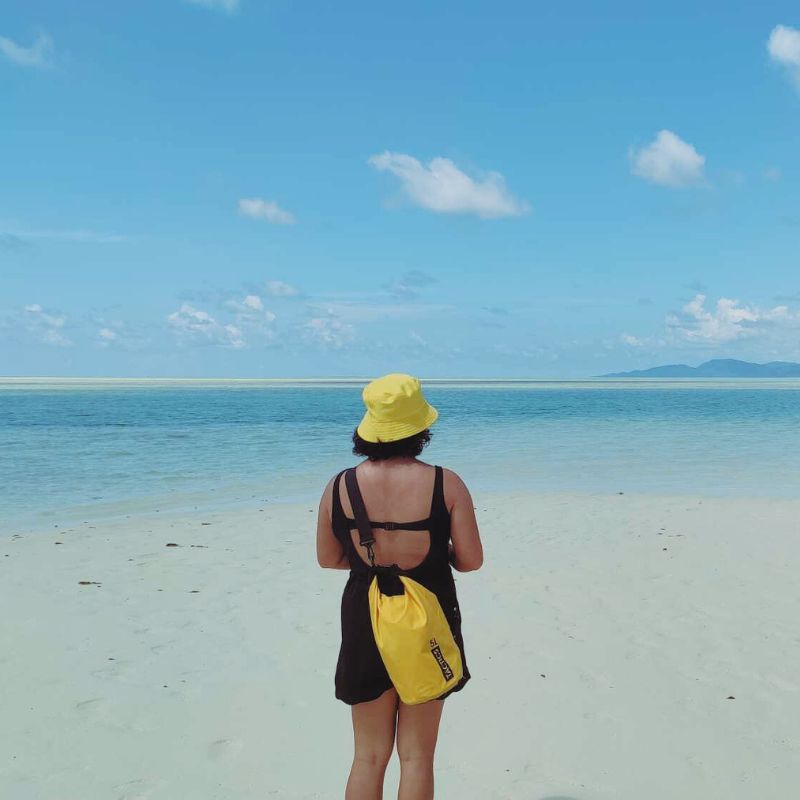
    YOLO TRAVEL PH BLOG IMAGES 1

    This only appears during low tide.

    A thin stretch of white sand in the middle of calm blue. Minimal. Quiet. Almost fragile.

    We didn’t stay long — just enough to walk barefoot and take it in.

    Some places don’t need hours. They just need presence.

    Canimeran & Canibungan Islands — The Gentle Goodbye
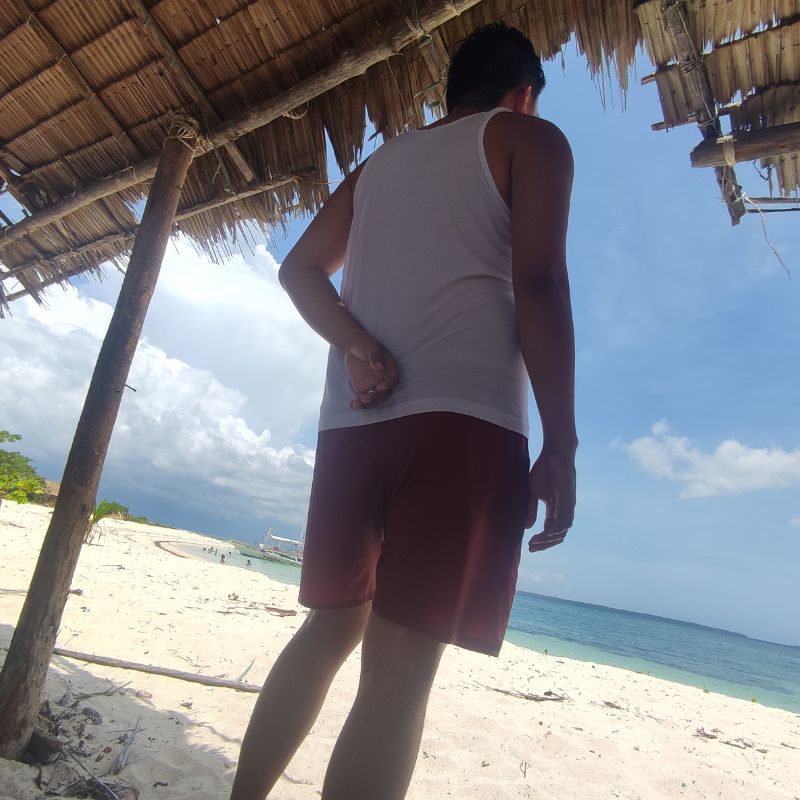
    25

    These final stops feel softer.

    By this point, you’re sun-kissed, slightly salt-crusted, and emotionally attached to your boat crew.

    Lunch tastes better on the last island. Conversations feel slower. You start thinking about the 5-hour ride back — but you’re not ready.

    Why Balabac Feels Different

    1. It’s Still Raw

    No resorts lining the beaches. No loud water activities. Just seaweed, sandbars, mangroves, coral reefs.

    It feels… unedited.

    2. Disconnection Is Built In

    Signal disappears for days. You stop checking notifications. You forget your screen time exists.

    And that silence? It resets something in you.

    3. The Water Is Unreal

    Shallow areas that suddenly drop deep. Crystal clarity everywhere. It’s beautiful — but respect the depth.

    4. The “Pirate” Myth

    You might hear stories. What we actually saw were coast guards patrolling the waters — understandable given Balabac’s proximity to the Spratly Islands.

    At no point did we feel unsafe.

    How to Get to Balabac

    From Manila

    Fly to Puerto Princesa (1.5 hours).
    Travel by van to Buliluyan Port (5–6 hours).
    Join your island-hopping tour from there.

    From Coron

    Travel to El Nido, then to Puerto Princesa, then onward south. It’s doable — but long. Most travelers fly into Puerto Princesa directly.

    Our advice? Book a tour that includes transfers. The coordination alone is worth it.

    Tour Packages: 3D2N vs 4D3N

    Our first trip was 3D2N.

    It was amazing.

    But our second trip — 4D3N — felt complete. That extra day allowed us to visit Mansalangan Sandbar and move at a less rushed pace.

    The 4D3N package with Kamp Malaya currently runs around ₱13,799 per head (joiner rate), inclusive of:

    • Van transfers (Puerto Princesa–Buliluyan–Puerto Princesa)
    • Boat transfers & island hopping
    • Accommodation
    • All meals
    • Entrance fees

    Flights not included.

    Camp Life: What to Expect

    • Shared bathrooms
    • Electricity at night only
    • Limited signal
    • Communal dining
    • The same boat crew serving your meals

    It’s simple. Functional. Not luxury.

    But you fall asleep to ocean wind and wake up to sunlight through palm leaves.

    That counts.

    Practical Tips (From Someone Who Learned)

    • Bring a dry bag. Non-negotiable.
    • Pack aqua shoes — many beaches have rock or coral.
    • Sit in the middle of the boat (trust me).
    • Dress for swimming on Day 1.
    • Don’t drink tap water.
    • Book months ahead if you want a hut instead of a tent.
    • Bring insect repellent.
    • Hydrate constantly.

    And mentally prepare for long travel hours. The van ride back is real.

    When to Visit

    Best months: February to May (dry season).
    Rainy season: June to January (still possible, but expect weather shifts).

    Temperatures hover around 25–30°C year-round.


    Budget Snapshot For 4D3N Package (Updated 2026 Rate)

    Since a lot of you ask for exact numbers, here’s the current joiner rate of the package we took with Balabac Island Tours – Kamp Malaya:

    4 Days & 3 Nights – ₱13,799 per head (Joiners Rate)

    And honestly, when you break it down, it’s pretty comprehensive.

    ✔ What’s Included

    • Roundtrip shared AC van transfers: (Puerto Princesa City ⇄ Buliluyan Port, 5–6 hrs land travel)
    • Roundtrip shared boat transfers: (Buliluyan Port ⇄ Balabac islands)
    • Full board meals: (Breakfast, Lunch, Dinner — except where noted below)
    • All entrance fees
    • Onok Island day tour (yes, included — which matters because entrance alone is pricey)
    • Accommodation at Sicsican Island: Camping tent / hutwith complete beddings (joiner setup)
    • Environmental fee
    • Life vest
    • Local tour guide

    When we did the math ourselves, the convenience alone — especially the permits and Onok Island coordination — made the rate reasonable.

    The 4D3N Itinerary (What Your Days Actually Look Like)

    Day 1

    2:30–3:00 AM – Hotel pickup in Puerto Princesa
    5–6 hour land transfer to Buliluyan Port

    30-minute passenger boat ride to Bancalaan Island (meet your guide)

    Then island hopping begins.

    📍 Stops:

    • Tangkahan Island
    • Patawan Island
    • Sicsican Island (Basecamp)

    🕔 Around 5:00 PM – Settle into camp, dinner, rest.

    It’s a long first day. You’ll be tired. But you’ll also be staring at water that doesn’t look real.


    Day 2 (Breakfast / Lunch / Dinner)

    📍 Stops:

    • Starfish Sandbar
    • Onuk Island
      (Turtle watching, giant clams, snorkeling)
    • Nasubata Reef (Snorkeling site)

    🕔 5:00 PM – Back to basecamp. Dinner. Sleep like a rock.


    Day 3 (Breakfast / Lunch / Dinner)

    📍 Stops:

    • Mansalangan Sandbar
    • Punta Sebaring
    • Rufos Coral Garden (Snorkeling site)

    🕔 Back to basecamp. Final dinner on the island.

    This is usually the night everyone starts saying, “Bitin.”


    Day 4 (Light Breakfast)

    🕕 6:00 AM – Travel back to Buliluyan Port
    🚗 Van back to Puerto Princesa
    🕑 2:00–3:00 PM – Estimated arrival in the city

    And yes — schedule your departure flight the day after the tour. Do not risk same-day flights.

    Important Notes (That Actually Matter)

    • You may upgrade to overnight on Onok Island, but there’s an additional fee.
    • All island visits depend on weather conditions (safety first — always).
    • Inform them ahead if you have seafood allergies or dietary restrictions.
    • There is no ATM on the islands. Bring enough cash.

    What’s NOT Included

    Just so expectations are clear:

    • Airfare
    • Hotel in Puerto Princesa
    • Day 1 breakfast (you’ll likely eat at a stopover)
    • Day 4 lunch & dinner
    • Personal expenses

    Cancellation Policy (Read This Carefully)

    • ₱1,000 per head deposit (non-refundable if you cancel).
    • If the tour is canceled by the operator due to weather or LGU directives before it starts, refunds are issued for services not rendered or you may reschedule (subject to availability).
    • If the tour has already started and must be cut short, no refund and no reschedule option.

    That’s standard for remote island operations — once boats and logistics are mobilized, it’s hard to reverse.

    Things You’re Expected to Bring

    • Toiletries
    • Light towel
    • Sunscreen
    • Personal medication
    • Cash

    Simple list. But forget one thing and you’ll feel it.

    So Is ₱13,799 It Worth It?

    Balabac is not for everyone.

    If you need luxury resorts and strong WiFi, this isn’t your place.

    But if you want to stand in water so clear you can see fish brushing your ankles…

    If you want to forget your phone exists…

    If you want to feel like you’ve stepped into a version of the Philippines that still breathes slowly…

    Then yes.

    Go at least once.

    We did.

    And we’re already thinking about a third time. In that price, you’re paying for:

    • Long land transfers
    • Fuel for multi-day boat use
    • Entrance fees (especially Onok)
    • Full meals for four days
    • Camp logistics in a remote location

    It’s not a luxury trip. It’s not a resort stay.

    It’s raw island living — handled for you so you don’t have to negotiate boats, permits, or island owners yourself.

    For us? Worth it. Twice.

    And if you’re already flying all the way to southern Palawan, I’d say go straight for the 4D3N. That extra day changes the pace of the whole experience.
  • How to Go to Balabac Palawan from Someone Who Had Been There Twice (2026 Update)

    How to Go to Balabac Palawan from Someone Who Had Been There Twice (2026 Update)

    If you’re looking to explore untouched beaches, island-hop through neon-mint waters, and swim with sea turtles in the wild—Balabac, Palawan is the dream. But before you get too excited, know this: Balabac is remote, and the journey isn’t simple.

    In fact, most travel blogs still point tourists to the wrong port, which can cause serious delays. I’m here to help you get it right based on my personal experience of booking this trip twice. This is your step-by-step guide on how to go to Balabac Palawan, with the insider tips you won’t find on generic travel sites. We also posted here the current tour package price this 2026.

    Is it safe to go to Balabac Palawan?

    Is it safe to go to Balabac Palawan? Yes, but Balabac DIY is not advised. Since 2023, more tour operators have been granted permits, making it safer than ever to travel with a legitimate group. We trusted Balabac Island Tours-Kamp Malaya (don’t confuse them with other “Malaya” operators) for both of our stays. They went above and beyond, and honestly, having local experts handle the logistics is the only way to ensure a safe, stress-free reset.

    How to Get To Balabac Palawan

    Step 1: Fly to Puerto Princesa

    Your journey of how to get to Balabac Palawan starts at Puerto Princesa International Airport (PPS).

    • The Flight: Book daily flights via Philippine Airlines, Cebu Pacific, or AirAsia.
    • The Strategy: Book a morning flight so you have time to rest in the city. You need a one-day stay in Puerto Princesa before heading south.
    • The Cash Rule: Have enough cash before you leave the city. There are zero ATMs on Balabac or the surrounding islets.

    Step 2: The Protocol for Losing Yourself (The Tour)

    Balabac is closer to Malaysia than Manila. It’s a group of 30+ islands with no malls and no commercial noise. Because it’s so far south, you need to research tour operators who offer all-inclusive packages.

    Where we booked twice: Kamp Malaya 4D3N All-In (2026 Update)

    Nope this is not a paid feature

    • Rate: Php 13,799 / Head (Joiner Rate).
    • The Essentials: RT Van (PPS-Buliluyan), RT Boat transfers, full board meals, and entrance fees.
    • Accommodation: We booked months ahead to snag a room at Kamp Malaya’s basecamp on Sicsican Island. If rooms are full, they have tents—but regardless, be clear on your inclusions so you don’t have false expectations.

    Step 3: The 3 AM Reality Check (The Correct Port)

    This is the most critical part of how to get to Balabac Palawan:

    🛑 DO NOT go to Port Rio Tuba. Old blogs still mention it, but it is no longer the jump-off point.

    The Correct Port is Port Buliluyan in Bataraza.

    The drive takes 5 to 6 hours from PPS. Vans leave early—usually between 3:00 AM and 5:00 AM. This is why you stay overnight in PPS; if you arrive at the airport late, you’ll miss the transfer.

    Step 4: The Boat to the Edge

    Once at Buliluyan Port, you’ll log your name in a small office.

    • The Ride: 2 to 4 hours depending on the waves.
    • Pro-Tip: Be dressed for island life before boarding. Put your dry bags, hats, and glasses on, and wear something you can swim in. Your main luggage will be stored under the boat; you won’t see it again until you hit the island.

    What to Do Once You Arrive: The Must-Visit Spots

    • Onuk Island: A private island with crystal-clear basins. It’s the spot for sea turtles and giant clams. Note: Ensure your tour includes Onuk, as it requires special permission.
    • Punta Sebaring: Pristine white sand as fine as baby powder that stretches for kilometers.
    • Candaraman Island: Famous for its sandbar and an abundance of starfish.
    • Nasubata Reef: The ultimate snorkeling site.

    Timing Your Visit and How Long to Plan Your Leave/Stay

    Best time to visit Balabac Palawan: Aim for March to May (Summer) or late February to early June. Be wary when booking between June to October—the Habagat (monsoon) brings rough seas, typhoons and possible cancellations.

    The Flight Buffer: Don’t Outrun the Ocean

    This is where most people mess up their reset. They try to “optimize” their leave credits by booking a 6:00 PM flight out of Puerto Princesa on the same day the tour ends.

    Don’t do it. Here is the reality of your final day:

    • The Sea is the Boss: You’ll be traveling back from the islands to Buliluyan Port by boat in the morning. If the waves are choppy or the tide is low, your 2-hour boat ride becomes a 4-hour crawl.
    • The Long Road Back: Once you hit land, you still have a 5 to 6-hour van ride back to Puerto Princesa. Even if you leave the port by noon, you aren’t hitting the city until 6:00 PM—and that’s assuming no flat tires or road delays.
    • The Transition Period: You will be covered in salt, sand, and sunblock. You’ll be exhausted. Do you really want to spend those final hours stressing about a check-in counter?

    The Golden Rule: Allot an extra night in Puerto Princesa after your tour ends. Use that night to get a hot shower, a proper meal at Kalui or Kinabuchs, and actually look at the photos you took. Book your flight home for the next day. Giving yourself that 24-hour “decompression chamber” is the only way to ensure the peace you found in Balabac doesn’t evaporate the moment you hit traffic.

    1

    How to get to Balabac Palawan from Manila

    There is no direct commercial flight or ferry that will drop you in Balabac. To get to Balabac from Manila, you are essentially performing a two-stage extraction:

    1. Air: Manila to Puerto Princesa (PPS).
    2. Land & Sea: PPS to Buliluyan Port (6 hours) and Buliluyan to the Islands (3 hours). Total travel time from your Manila doorstep to a Balabac sandbar is roughly 12 to 14 hours, provided you don’t hit delays. This is why we insist on the “Day 0” arrival in PPS.

    Manila to Balabac Flight (The Myth vs. The Reality)

    Search engines might tease you with a “Manila to Balabac flight,” but unless you are chartering a private plane to land on a private airstrip (like the one on Bugsuk Island), this does not exist for the average traveler. Your “flight to Balabac” is actually a Manila to Puerto Princesa flight. From there, the road takes over.

    Manila to Puerto Princesa Flight

    This is the easiest part of the journey.

    • Airlines: Cebu Pacific, Philippine Airlines, and AirAsia run multiple loops daily.
    • Duration: Approximately 1 hour and 20 minutes.
    • Pro-Tip: Book the earliest morning flight possible. It gives you the afternoon in PPS to coordinate with your Kamp Malaya contact, withdraw all the cash you’ll need, and buy your “nik-nik” (sandfly) repellent.

    The Intra-Palawan Grind: Travel Times from Other Palawan Areas (Coron, El Nido, and Port Barton)

    If you are already in Palawan and moving south, do not underestimate the distance. You are traveling from the north/central region to the literal tip of the archipelago.

    Coron to Balabac Travel Time

    • The Reality: This is a mission. There is no direct boat or flight.
    • The Route: You must first take a ferry (slow boat: 15 hours / fast craft: 5 hours) or a flight from Coron to Puerto Princesa.
    • Total Time: Allot 2 full days. One day to get to PPS, and the next day (starting at 3 AM) to head to Balabac.

    El Nido to Balabac Travel Time

    • The Route: You have to travel south via land to Puerto Princesa first.
    • The Ride: A shared or private van takes about 5 to 6 hours from El Nido to PPS.
    • Total Time: Allot at least 24 hours. You’ll need to arrive in PPS in the afternoon, stay the night, and then join the 3 AM van to Buliluyan the following morning. Do not try to go El Nido → PPS → Buliluyan in one go; you will arrive at the port after the boats have already left.

    Port Barton to Balabac Travel Time

    • The Route: Similar to El Nido, you must go back to the PPS hub.
    • The Ride: Port Barton to PPS is about 3 to 4 hours by van.
    • Total Time: 1.5 Days. Reach PPS by the afternoon, rest, and prep for the early morning van to the south.

    The reason these travel times are so long is that Balabac is protected by its own geography. The hours spent in a van or on a ferry are the price of admission to a place that hasn’t been ruined by convenience.

    Quick Recap for you 2026 Balabac Trip

    If you’re skimming, here are the non-negotiables for your 2026 trip. Save this, screenshot it, or send it to your group chat.

    Is it safe? Yes. Stick to permitted tour operators (like Kamp Malaya) to avoid crocs (mainland) and maritime issues.

    Best Time to Visit: March to May for glass-calm seas; late Feb to early June is the safe window.

    Total Days Needed: 5-6 Days. (1 Arrival day, 4 Tour days, 1 Buffer/Departure day).

    The “Port” Trap: DO NOT go to Rio Tuba. The only correct jump-off is Port Buliluyan.

    The Money Rule:Zero ATMs. Bring all the cash you need from Puerto Princesa.

    Booking Lead Time: 3–6 Months. Rooms at Kamp Malaya sell out fast; tents are the fallback.

    The “How to Get There” Cheat Sheet

    • Manila to Balabac Flight: Doesn’t exist. Book Manila to Puerto Princesa (PPS). It’s a 1.25-hour flight followed by a 6-hour van ride.
    • Coron to Balabac: Expect a 2-day mission. You must fly or take a ferry (5–15 hrs) to PPS first, stay the night, then head south.
    • El Nido to Balabac: A 16–18 hour journey. Van to PPS (6 hrs), overnight stay, then the 3 AM van to Buliluyan.
    • Port Barton to Balabac: Roughly 13–15 hours. Van to PPS (4 hrs), overnight stay, then the early morning push to the port.

    Balabac isn’t a destination you “squeeze in.” It’s a destination you commit to. The travel times are long because the payoff is huge—untouched sandbars, no signal, and the version of yourself you haven’t seen in years.

  • Onuk Island Balabac: The Only Place Far Enough to Make You Forget Your Password.

    Onuk Island Balabac: The Only Place Far Enough to Make You Forget Your Password.

    If you’re reading this while pretending to be active on Slack, I see you. If you’re sitting in a coffee shop in BGC, staring at a spreadsheet and wondering if life is just a series of Zoom calls until you die, this is for you.

    Forget the curated sunsets of El Nido. Forget the drone shots of Coron, that view’s hard to come by if you’re not flying like that machine. We’re going south. Way south. To a place where the Wi-Fi signal goes to die and the “Art of the Tambay” is the only metric of success.

    Welcome to Onuk Island, Balabac. It’s messy, it’s far, and it’s the most honest place you’ll ever visit.

    Where is Onuk Island Located? (And why that matters)

    Let’s get the logistics out of the way. Where is Onuk Island located? It sits in the municipality of Balabac, at the jagged southern tip of Palawan. If you look at a map, it’s closer to Malaysia than it is to Manila.

    That distance isn’t just a number; it’s a filter.

    Most people won’t make it here. The “Insta-famous” crowd usually gives up when they realize there are no infinity pools or boutique hotels. Reaching Onuk is a commitment to the journey itself. It involves a 6-hour van ride that will test the limits of your lower back, followed by a boat ride that depends entirely on whether the Sulu Sea is having a good day or a mid-life crisis.

    But that’s the beauty of it. The effort required to get here ensures that once you arrive, you aren’t surrounded by tourists; you’re surrounded by travelers.

    How to Actually Get to the Middle of Nowhere: Why We Trust Kamp Malaya

    This is not a paid feature, we just really loved our Kamp Malaya experience

    I’ve been to the edge of the map twice now, and both times, I let Balabac Island Tours-Kamp Malaya handle the logistics. In a place where the ocean is the boss and the ports are confusing, you don’t want to be the one “figuring it out.” You want to be the one yielding to the experience.

    Booking directly with them is the only way to go. They don’t just give you a boat; they give you a home base on Sicsican Island.

    The Specs: 4 Days & 3 Nights (The All-In Reset)

    Rate: Php 13,799 / Head (Joiner Rate)

    This isn’t a luxury line item. It’s an all-in package that covers the essentials so you can actually forget your phone exists:

    • The Transit: Round-trip van transfers from Puerto Princesa to Buliluyan Port (the correct port) and the boat transfers between islands.
    • The Fuel: Full board meals (Breakfast, Lunch, Dinner). No menus, no decisions—just fresh food.
    • The Entry: All entrance fees and the coveted Onuk Island day tour are included.
    • The Sleep: Camping tents with complete beddings at their basecamp on Sicsican Island.

    Pro-Tips from Someone Who’s Been There Twice

    • The Buffer Rule: Take a flight to Puerto Princesa a day before your tour starts. Book your exit flight for the day after your tour ends. The Sulu Sea doesn’t care about your airline’s schedule.
    • The Onuk Upgrade: If you want to wake up in the middle of that mint-green water, you can stay overnight on Onuk Island for an additional fee. It’s a literal dream.
    • Food Prep: If you have allergies (shrimp, crabs, pork), tell them early. They cook what’s fresh, so give them a heads-up.
    • The Essentials: Bring a light towel, reef-safe sunblock, and Cash. There are no ATMs on the islands, and you can’t pay for extra halo-halo with a QR code.

    The Fine Print (Because Reality Matters): A Php 1,000 deposit secures your slot. It’s non-refundable if you cancel, but if the Coast Guard calls off the trip due to weather, they’ll refund the services not rendered or help you reschedule. Once the boat leaves the port, you’re committed to the plot.

    The “No Drones, No Good Cams” Reality

    At YOLO Travel Philippines, we have a thing: No need for drones, or the best cams. Why? Because when you see Onok island photos online, they look like they’ve been hit with every filter in the book. You assume it’s fake. Then you get there with your beat-up smartphone or just your own two eyes, and you realize the water actually is that ridiculous shade of mint-green.

    You don’t need a 4k drone to capture the fact that the ocean here looks like it’s been lit from underneath. You just need to be present. Onuk doesn’t perform for your followers. It just exists.

    What Onuk Island is Actually Known For

    • The Infinite Flats: At high tide, you’re standing in a basin of luminous cyan. At low tide, the island sheds its skin. Massive sandbars emerge—broad, firm stretches of white that make you feel like you’re walking on the edge of the world.
    • Unstaged Marine Life: The turtles here don’t care about your GoPro. They surface for air, look at you with total indifference, and head back down. You might see a small reef shark or a ray gliding like a shadow across the sand. No one is baiting them. It’s just their home.
    • The Silence: No “beach club” beats. No jet skis. Just the sound of the wind and the water breaking against the reef. For a burned-out digital worker, this silence is loud. It’s the sound of your brain finally resetting.

    It would be pricey but keep in mind that this isn’t a “luxury tour.” It’s an invitation to a simpler, saltier version of life.

    The Onuk Island Tour Package: What You’re Actually Buying

    Don’t go looking for this on a fancy booking site. You won’t find it. To get here, you’ll usually book an Onuk island tour package through local operators based in Balabac town.

    2

    The Real-Deal Specs:

    1. Accommodation: Think open-air stilt houses or tents. You get a mattress and a mosquito net. That’s it.
    2. Electricity: A generator might run for a few hours at night. Use it to charge your phone—not so you can scroll, but so you have a flashlight when you need to find the bathroom at 2 AM.
    3. Food: Whatever was fresh at the market or caught that morning. Fish, rice, maybe some seaweed (lato) that tastes like the ocean. It’s real food for real hunger.
    4. The Bathroom: It’s a bucket-and-dipper (tabo) situation. If you can’t handle that, Balabac isn’t for you—and that’s okay. But there’s something strangely grounding about manual labor just to flush a toilet.

    The Art of the Tambay: Slow Travel for the Soul

    The “Slow-Living” seeker knows that the best part of travel isn’t the “doing,” it’s the “being.”

    On Onuk, you don’t have a checklist. You have the tides. When the tide is low, you walk. You watch the tiny crabs. You notice how the sky reflects in ankle-deep water. When the tide is high, you float.

    For the Lost & Found Adventurer

    Things will go wrong. Your boat might be delayed by two hours because the captain had to wait for a specific delivery. It might rain. You might get a “Balabac Kiss” (a sandfly bite).

    The old you would have sent a frustrated email. The “Onuk” you just laughs and buys another 20-peso halo-halo from a local vendor. You start to realize that the mishaps are where the stories are. The delays are just extra time to talk to the backpacker next to you about their life in a hostel in Vietnam or their job as a VA in Davao.

    The “Buffer” Rule: Why You Need 6 Days for a 4-Day Trip

    If you try to “optimize” this trip by flying into Puerto Princesa and expecting to be on a boat three hours later, the universe will laugh at you. In the south, speed is a myth.

    To actually own your life offline, you have to respect the logistics of the edge. Here is the reality of the timeline:

    • The Day Zero Arrival: You need to be in Puerto Princesa (PPS) the day before your tour starts. The van to Buliluyan Port leaves at 2:30 AM. Unless you plan on teleporting from the airport to the van, get a hotel in the city, eat a real meal, and sleep for four hours. You’ll need it.
    • The Day 1–4 Journey: This is the heart of the reset. This is when you’re with Kamp Malaya, navigating the tides.
    • The Day 5 Safety Net: Do not, under any circumstances, book your flight out of PPS for the same afternoon you return from the islands (Day 4). Between the boat ride back to the mainland and the 6-hour van crawl back to the city, you won’t reach PPS until 3:00 PM or later—assuming there are no flat tires or sea swells.
    • The Verdict: Allot at least 5-6 days total. Arrive Day 0, Tour Days 1–4, Fly home Day 5 (or later).

    Giving yourself an optional extra day in PPS isn’t “wasted time.” It’s a transition period. It’s the “decompression chamber” before you have to look at a laptop again.

    Why Digital Nomads Need This (And Why They’ll Hate It Initially)

    If your identity is tied to your “responsiveness” on Slack, Onuk is going to hurt.

    For the first four hours, you’ll feel an itch in your pocket. You’ll check for signal. You’ll find nothing. You’ll feel a weird sense of panic. What if someone needs me? Then, the sun starts to set. The sky turns a bruised purple and gold. The Milky Way starts to peek out because there’s zero light pollution. And you realize: the world didn’t stop because you went offline.

    You aren’t producing “deliverables” here. You’re producing clarity. You’re remembering that you are a human being, not a resource.

    First-Timer Realities: The Raw Version

    • Sun Protection: There is no shade on a sandbar. If you don’t wear a rash guard, the sun will eat you alive.
    • Cash: Bring it. Lots of it. There are no ATMs in the middle of the West Philippine Sea.
    • Connectivity: Forget it. Consider it a feature, not a bug.
    • Flexibility: The ocean is the boss here. If the Coast Guard says don’t sail, you don’t sail. Yield often, laugh often.
    onuk island balabac

    Is Onuk Island Worth It?

    If you need a 5-star resort to feel like you’ve traveled, stay in Manila.

    But if you want to stand on a sandbar so far from civilization that the stars look like they’re touching the water… if you want to eat with your hands and sleep to the sound of waves hitting the stilts under your bed… if you want to remember who you are when you aren’t “logged in”…

    Then yes. Onuk Island is worth every bumpy van ride. You’ll leave with salt in your hair and sand in your bag, but you’ll also leave with a quietness in your chest that you haven’t felt in years.